

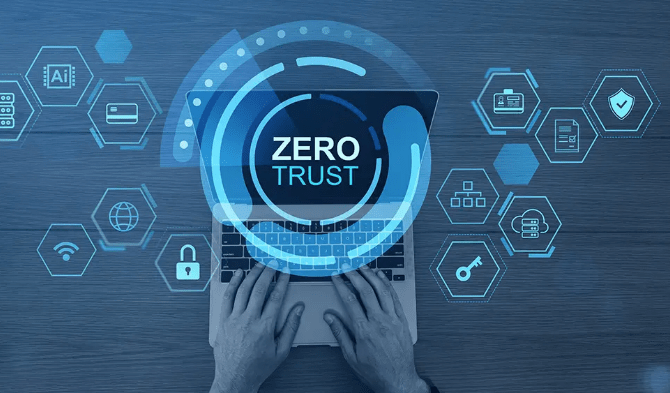
In today’s digital-first world, traditional security models are no longer enough to protect organizations from increasingly sophisticated cyber threats. The old approach of “trust but verify” relied heavily on perimeter defenses, assuming that anything inside the network could be trusted. But with remote work, cloud adoption, and mobile access becoming the norm, the perimeter has effectively disappeared. This is where Zero Trust Security emerges as the new gold standard.
What is Zero Trust Security?
Zero Trust is a security framework that operates on the principle of “never trust, always verify.” Instead of assuming users or devices within the network are safe, Zero Trust requires continuous authentication and strict access controls for every request, no matter where it originates.
Why Enterprises Are Adopting Zero Trust
- Rise of Cyber Threats
Cybercriminals exploit weak points in networks, including compromised accounts and insider threats. Zero Trust reduces the risk by ensuring that every access request is verified in real time. - Remote and Hybrid Work Models
With employees accessing resources from multiple locations and devices, perimeter-based security is outdated. Zero Trust enables secure access without relying on location. - Cloud and SaaS Adoption
Enterprises increasingly rely on cloud services, which lack traditional perimeters. Zero Trust provides consistent protection across cloud, on-premises, and hybrid environments. - Compliance and Data Protection
Regulations like GDPR, HIPAA, and PCI-DSS require stronger data protection. Zero Trust helps enterprises meet these requirements by limiting unnecessary access and ensuring traceability. - Minimizing Insider Risks
Not all threats come from outside. Zero Trust limits access to only what’s necessary, reducing damage even if an insider account is compromised.
Core Principles of Zero Trust
- Verify Every User: Strong authentication methods like MFA (multi-factor authentication) are mandatory.
- Least Privilege Access: Users only get access to the resources they need, nothing more.
- Micro-Segmentation: Networks are divided into smaller zones to contain potential breaches.
- Continuous Monitoring: User behavior and device health are constantly analyzed for anomalies.
- Assume Breach: The mindset is that attackers may already be inside, so proactive defense is necessary.
Benefits of Zero Trust for Enterprises
- Stronger protection against modern cyberattacks.
- Better visibility and control over user activity.
- Reduced attack surface and minimized damage from breaches.
- Easier compliance with global security regulations.
- Enhanced trust with customers, partners, and stakeholders.
Challenges in Implementation
- Complexity: Shifting from legacy systems to Zero Trust requires careful planning.
- Cost: Upfront investment in new technologies and training may be significant.
- Cultural Change: Employees and IT teams need to adapt to new security practices.
Conclusion
Zero Trust is no longer a buzzword—it’s a necessity. As cyberattacks grow in frequency and complexity, enterprises can no longer rely on outdated perimeter defenses. By adopting a Zero Trust framework, organizations can build a security posture that is adaptive, resilient, and aligned with the realities of today’s connected world. For enterprises looking to safeguard data, strengthen compliance, and build long-term resilience, Zero Trust Security is the gold standard.